The quiet look at the whole shelf when you cannot decide.
A crate of hundreds hides the copies you have not touched. Pulse puts neglected records, streaks, genres, decades, and the notes you sent in one place. It is not a chart for the feed. It is how you see the collection the way a collector already thinks: what is quiet, what is loud, who might need a copy.
The four numbers
Open Pulse when Tonight feels stuck. Spins this month. Listening streak. Copies never played. Size of the crate. Unplayed is the stack still in shrink, or the one you meant to play in March.
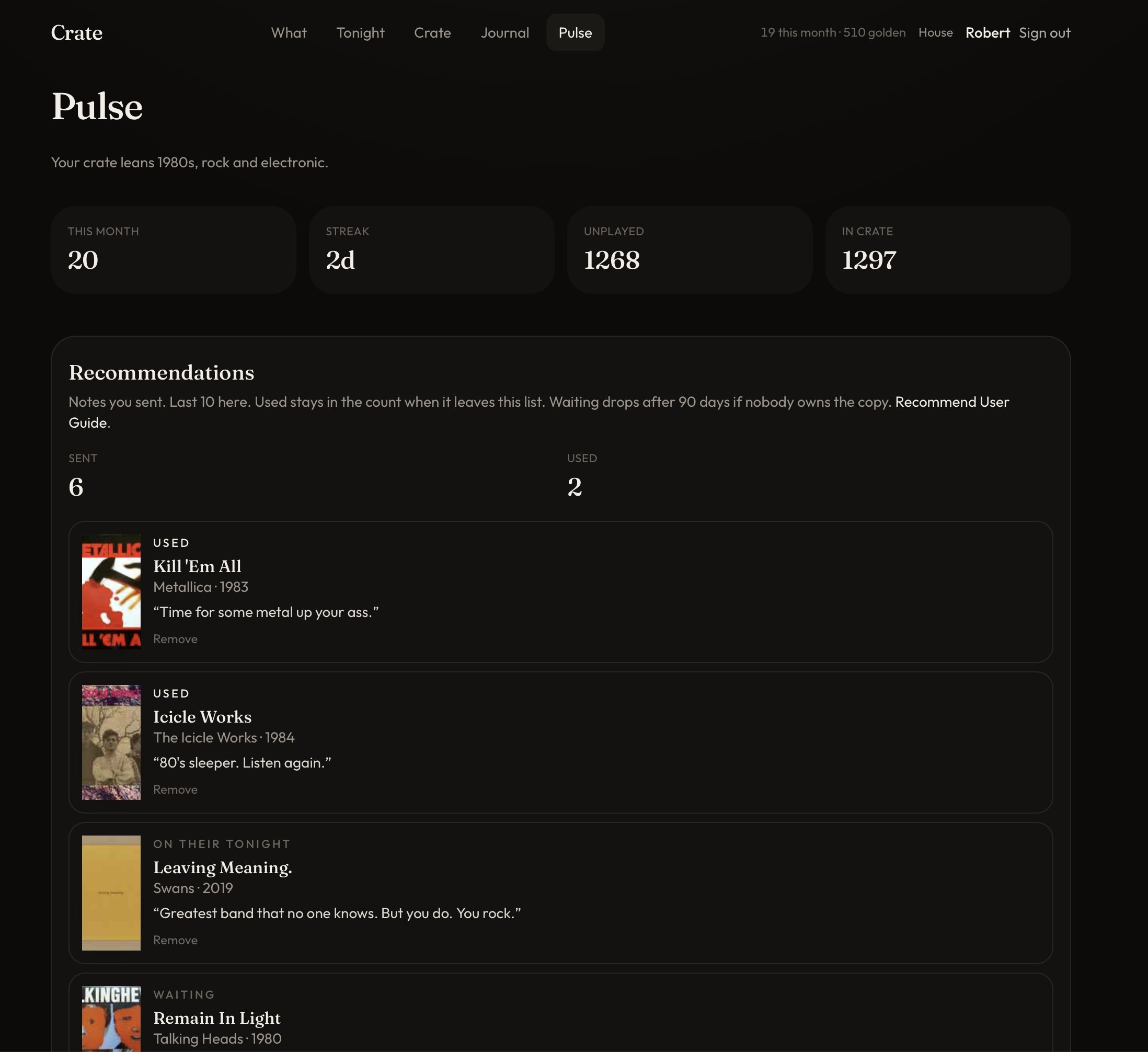
Recommendations you sent
Last ten here. Used stays in the count when a row leaves this list. Waiting drops after 90 days if nobody owns the copy. Hide a row if you are done looking at it. The count stays. Recommend User Guide.
Invites live on your account: send ten notes to a friend. If they join, they get those ten, and you get ten golden notes. We do not keep their address. We never send them anything but that letter. Notes User Guide.
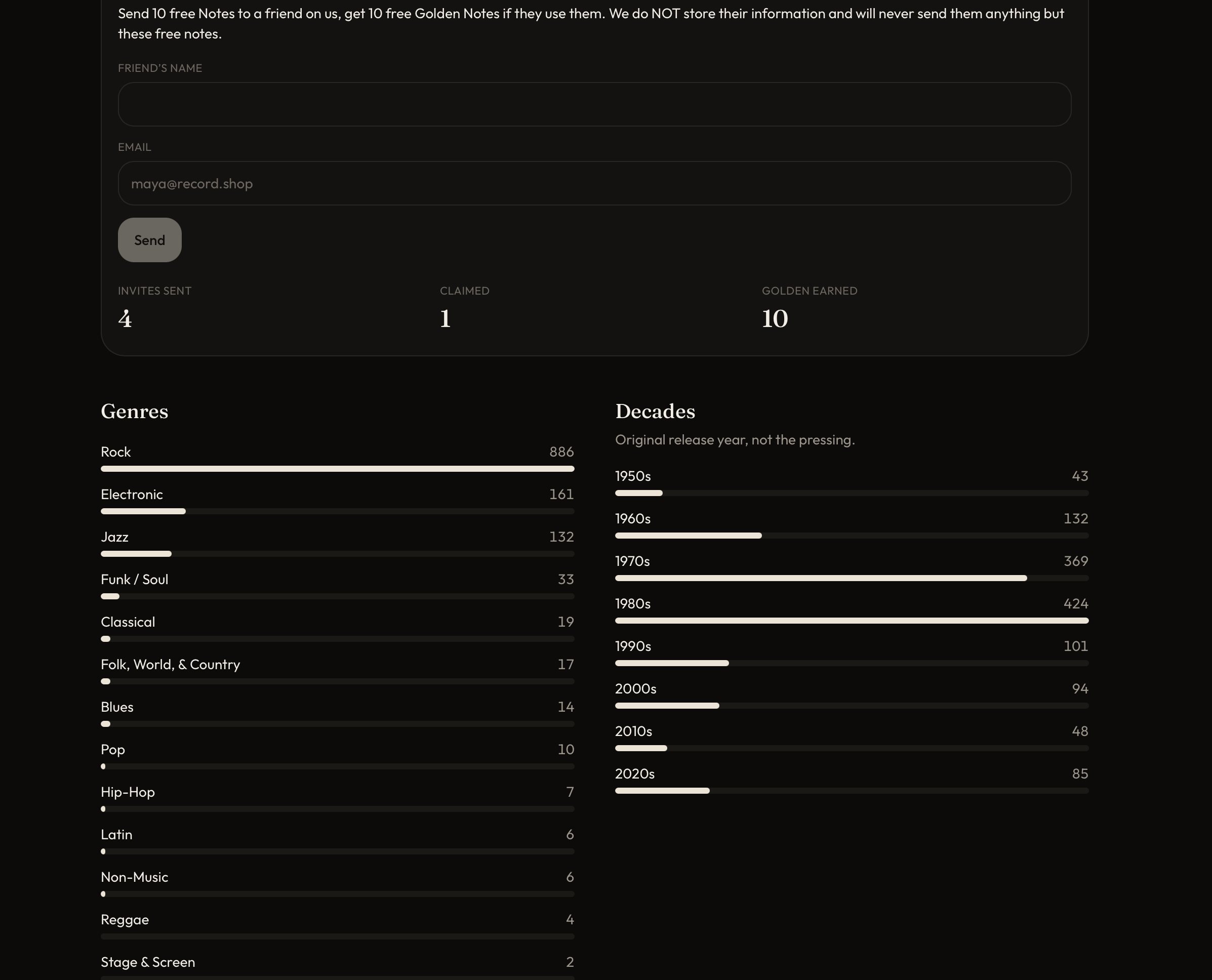
How the shelf leans
Genres and decades show the shape of the crate — useful when you think you “have no jazz,” or that everything is 1970s. Decade is year released, not year pressed.
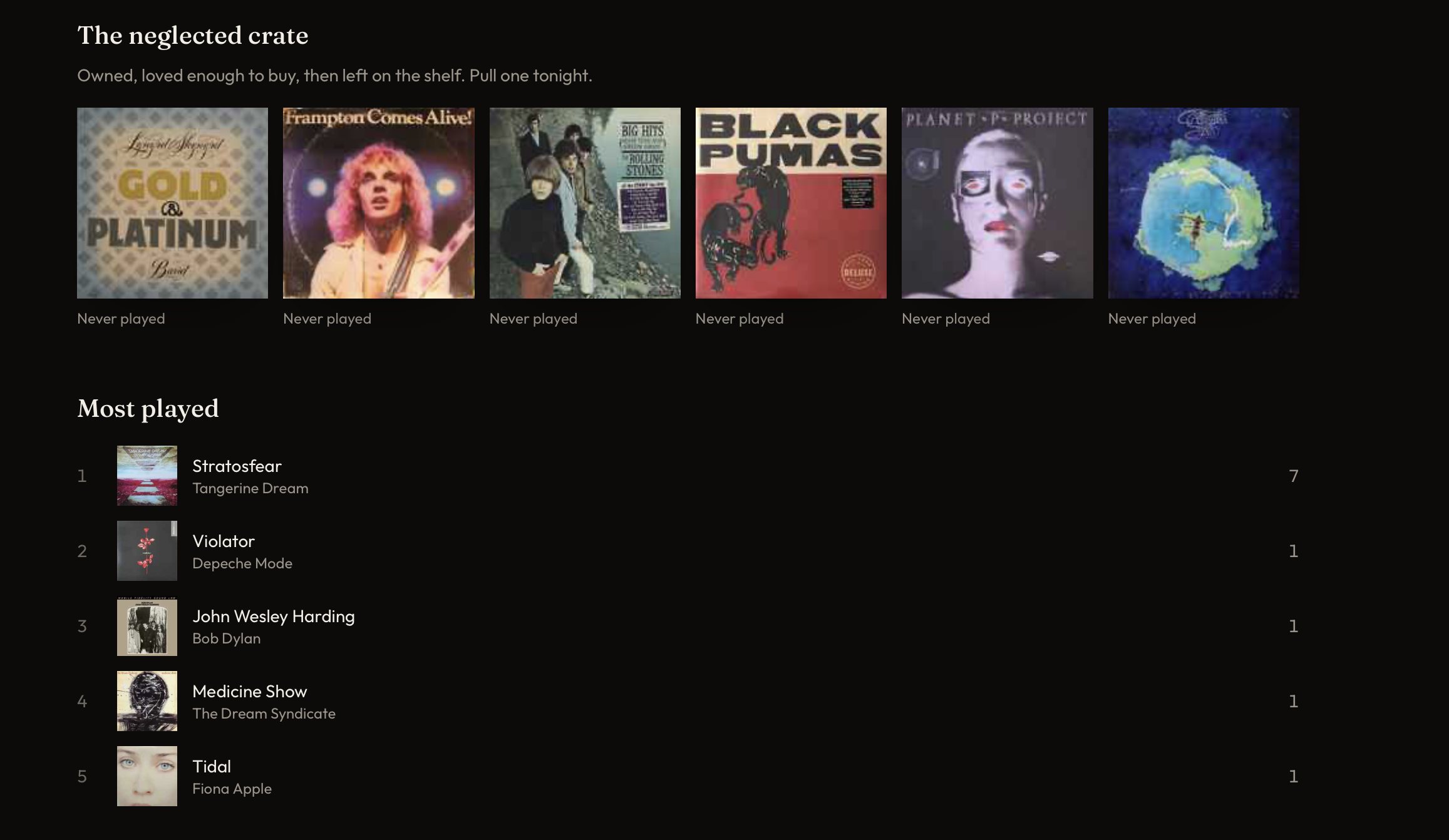
Neglected, and most played
Owned, loved enough to buy, then left on the shelf. Tap a cover and it becomes tonight. Most played is the other end: what actually got the needle.
Why collectors open it
Pulse does not shuffle. It points at a spine — quiet too long, or played to death — and lets you pull it.