The notebook by the chair. What you pulled, played, sent, and wrote.
Vinyl people already keep lists — paper, Discogs, a notes app. The journal is that notebook tied to the crate: chronological, newest first, and it stays with the account. You do not reconstruct last Tuesday from memory.
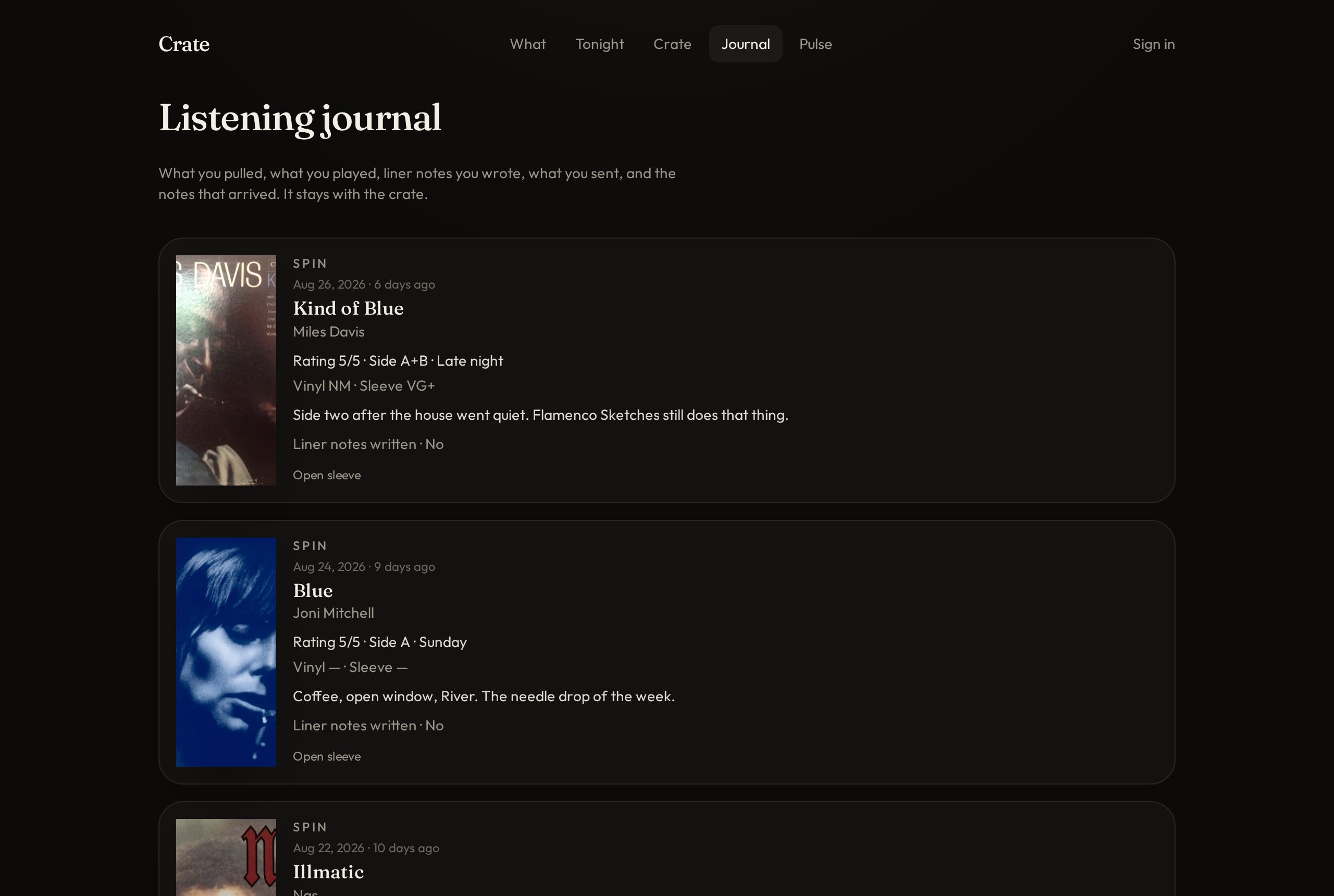
What it records
- Pulled — a copy came off the shelf for tonight.
- Spun — you logged rating, side, mood / situation, vinyl and sleeve grade, a note if you wrote one.
- Added / Corrected / Deleted — a copy landed on the shelf, you fixed the artist, album, year, or genre, or you took it off.
- Wrote liner notes — liner notes got written for that album.
- Wrote own copy — you wrote your own liner notes on the jacket.
- Recommended / They put it on / Recommended to you — you sent a copy, they used it, or you accepted one.
- Joined, received monthly notes, received golden notes — when you join, when month-notes arrive, when golden notes land.
Cover, artist, and album stay on the row so you can see what the night was.
How to use it
- Play something. Log the spin on Tonight. That is the row that matters.
- Open Journal when you forget what you played, or whether the liner notes got written.
- Tap Filter your journal to turn kinds on and off. The page still shows the latest 500. Calendar opens older nights. Tap a cover to put that copy on Tonight.
- Membership: tap Export. The notebook comes home as a spreadsheet — when, kind, artist, album, rating, side, mood, notes.
Why it stays
Taking a copy off the crate does not erase nights you already logged. A Deleted row is added. Correcting a typo does not rewrite those nights. A Corrected row is added. The notebook is the history of listening, including how the shelf changed.